Dr. Su Lyn Corcoran, PhD in Education – Street-connected young people and inclusive education, University of Manchester, 2016
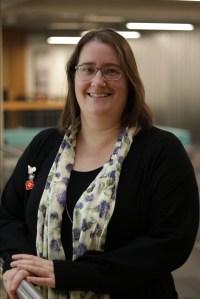
My journey through higher education can be described as full of stops and starts, with adventures into teaching and education in between. This is partly because I am interested in so many things (one of the advantages of an ADD* brain) and couldn’t quite decide on a specific direction of travel, partly because I was the first person in my family to go to university (at least in living history), and mostly because I wasn’t sure that I fitted in higher education and as I like to understand how things work, I wanted to see myself on a future trajectory that fitted with having a PhD and working in a university.
I graduated with a Bachelor of Science in physics from the University of Durham in 1999. I had wanted to go on to Masters-level study, but my final results did not reflect my abilities and on paper I was not an appropriate candidate. One of the disadvantages of my particular form of ADD is that my brain goes blank in extremely emotive and high-pressured situations such as examinations. Therefore, while I achieved high marks in the coursework tasks as part of my final year, which saved my overall degree grade, I did not do very well in the exam hall. It is probably this aspect of my own education that first began to shape my later interests in inclusive education.
Being measured only by exam success
When I realised that I would not be able to take up my place as a Masters-level researcher focused on magnetospherics – I have always loved the Northern lights – I quickly applied to study a postgraduate certificate of secondary education in science before leaving for an already planned gap year in East Africa. Serendipitously, I ended up teaching physics and mathematics rather than the English language I was expecting to share with my students. This year overseas, in addition to a later two-year post working at an international school in Jakarta, inspired a need to understand more about international relations, the reasons behind the inequality I was witnessing, and the barriers created within and by education systems that learners are forced to negotiate.
My experience overseas meant that I was able to study for a master’s in development studies at the University of Manchester, because my work experience counted alongside my less than impressive undergraduate results. I had also studied two units on comparative religion at the Open University alongside my teaching, so that I could understand how to write the essays that had not been part of my science-based education. When I received the course handbook for my master’s pathway, I removed the staples and proceeded to throw every page with a module that was assessed by an exam in the bin. My module choices were therefore determined by what was left.
My master’s year was a huge learning curve as I began to learn a completely new language – of economics and politics – and of developing confidence in my ability as a student. At the time, I had no idea that I had ADD and my final year undergraduate exam performance had severely affected how I saw myself – even though I had been given a place on the course. One of the major challenges that I had post graduation was trying to explain why I had a low grade. People will happily believe that you didn’t work hard or, as I shamefully said sometimes to avoid the looks of disbelief, that “it turns out I wasn’t as good at maths as I thought I was”, but they are often sceptical if you try to explain that you can’t do exams. In the end, I graduated with a distinction in my masters dissertation and a merit overall.
Becoming a doctoral researcher
For the next 18 months, my master’s supervisor periodically suggested I investigate doing a PhD, but I wasn’t exactly sure what I wanted to focus on and I still didn’t feel like I was good enough. Post-masters study, I took on voluntary placements with a number of non-governmental organisations to gain practical experience of the international development industry. I returned to the classroom, bringing a new understanding of global citizenship to my students with me and developed a school-wide programme to focus on sustainability and human rights.
Eventually, I decided to take six months sabbatical from teaching to potentially explore a practical focus for my PhD. My master’s thesis had focused on protracted refugee situations and I was potentially thinking about repatriations and reintegration, maybe in relation to child soldiers returning to education. I travelled to Kenya to work as a teacher at a transition centre for street-connected boys as they began the process of going back to family homes or into alternative care. This charity was using the same reintegration process that they had developed working with child soldiers in Northern Uganda years earlier, and I wanted to understand more about this transition process. Over a decade later, I am still very much involved in understanding street-connectedness and advocating for more appropriate social policies and the development of inclusive pedagogies of practice in education. I also explore the intersections of experience around transitions and what can be learned from exploring street-connectedness to help children undergoing transition in and through education in other contexts, such as the UK.
My time in Kenya inspired my PhD focus and I returned to teaching to save enough money for the first year of my doctoral studies. As I was unsure about whether I would be able to afford to complete a full PhD or go part-time, I began the first year with a backup plan of being able to at least finish with a master’s in research methods. I had to complete the modules anyway as they were already a compulsory part of the four-year PhD programme. The benefit of doing this four-year programme was that I was able to develop a successful track record of study, as I achieved distinctions in all of my research methods assignments except one, and so I was shortlisted for a studentship funded by the Economic and Social Research Council, through the Northwest Doctoral Training College. Without this funding I would not have been able to complete the next three years as a full-time student, and it was in achieving this scholarship that I finally started to believe that I was good enough to be in academia. It has been a journey of proving to myself that I could do it after having my original plans curtailed by my exam results, but it was also a learning journey that has provided a great deal of experience that forms much of the foundation from which I approach interdisciplinary and cross-sectoral education research.
Becoming an Early Career Researcher
Doing my PhD was hard, I eventually took five years to complete my thesis. I thoroughly enjoyed doing the research, analysing the data, and learning from the findings, but creating an 80,000 word document was a major hurdle, especially when I was already seeing the impact of my research in the adaptations that were being made in the social work programmes delivered by the community-based organisations who I worked with in Kenya. Eventually I managed to find a way in which I could marry my practice-appropriate findings to a new conceptualisation of street-connectedness that would be appropriate to practical and academic writings. This is a very important part of how I see research. Another hurdle was finding out that I had ADD at the end of my third year, and recognising how much it had affected my education up to that point. I had to overcome the grief of understanding that I had spent years criticising myself for not being able to do certain things and now there was a simple explanation for why they happened.
It was eventually liberating to know that I had ADD and to reflect upon how I had managed to have a successful career in education so far, and to re-develop work management techniques that could help me focus on the reading and writing inherent to a post in academia. Recognising how I had already managed to overcome the challenges inherent to ADD to get where I was provided quite a bit of impetus to push for the PhD finish line, and I had an amazing group of friends, many of whom still support me today.
Early on in our doctoral studies, a group of us created a peer support network, meeting regularly to discuss our ideas, brainstorm ways forward and critique each other’s writing. In addition, I began to network with other people working or conducting research with street-connected young people. For example, I attended Consortium for Street Children conferences and volunteered at the Street Child world Cup in 2014. I also became programme officer for the Enabling Education Network in 2012, a mostly voluntary role I still have today. The organisation is a platform of information sharing about inclusive education that promotes south-south knowledge exchange. Being part of this network helps me to see how my research fits into a bigger picture of inclusive education.
To me, doctoral study and all research projects are as much about the support networks you have in place as they are about your own hard work and focus. As an early career researcher in my first permanent position post-PhD, I recognise the importance of collaboration and ensuring that I create a supportive environment in which my colleagues and I are able to move each other forward and meet the needs of our students or the people who participate in our research. As a teacher, this is something that is inherent to education. In schools, we work together to push our students forward, and so it makes sense that we should do that as employees working in higher education.
I now coordinate an early career researcher network in the Faculty of Education at Manchester Metropolitan University. It is a project that could take all of my time if I let it. I recognise my privilege in being able to apply for my master’s course when I did, as alternative routes to higher education are – in the UK at least – being cut in favour of high grades and perceived notions of excellence. I am also thankful that I was able to use the first year of a now non-existent four-year programme to achieve my scholarship. It is therefore important to offer support for others who do not have these opportunities.
It is worrying that many opportunities for people to access higher education are being restricted as diversity is the key to developing successful research informed policy and in lifting up role models for future students. Just as the individual learners in our classrooms bring particular stories (full of unique challenges as well as unique skills and opportunities) that affect how they engage and perform, our colleagues bring histories of practice and varied experiences and responsibilities to their roles. For education, and higher education to be equitable and inclusive, we need to recognise that our differences are our strengths, and the ways in which we collaborate and support each other are central to our professional development: to our ability to adapt our teaching roles to the changing needs of the students we endeavour to educate; to meeting the challenges of the changing face of education research; and to ensuring the longevity and inclusiveness of the institutions who employ us.
So, I am ending with a call to action. Doing a PhD is tough, but if you know that a PhD will enable you to follow your chosen pathway – for example, I love the lifelong learning and new discoveries inherent to being a researcher – then build your networks and find out more. When you get there, your PhD will potentially provide a unique space of freedom and autonomy, as you explore the answers to a question that nobody else is working to answer, and build the platform from which you will later develop your research and professional networks in the future. Embrace the challenge, make lifelong friends, and potentially build experiences of new places and a new identity.
Su is currently a research associate at Manchester Metropolitan University, programme officer at the Enabling Education Network, and a member of the Women in Academia Support Network steering committee.
*ADD – Attention Deficit Disorder (terrible name for what can be a superpower in a world that recognises diversity)


 Dr. Sis
Leave a reply to essayitlikeyoumeanit Cancel reply