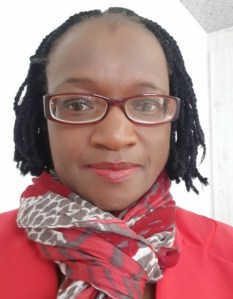
Locardia Shayamunda, PhD in Silviculture and Rural Development at the faculty of Environment and Natural Resources, University of Freiburg, 2020
Working for an International Development Agency, there were many questions regarding implementation of projects, effectiveness, efficiency, and sustainability that could not be answered at workshops, seminars, and meetings. I then felt such questions would best be answered through a research study. This was one important reason that l embarked on research in the area of rural development. Secondly, l was motivated to carry out the research for purposes of generating new knowledge to build on the existing body of knowledge, particularly on the effectiveness of support strategies from International Development Agencies, Non-Governmental Organisations (NGOs), Private Companies, and many others. I was equally inspired by the willingness and readiness by such organisations to cooperate and provide data related to specific questions on the subject matter.
My first choice was the University of Freiburg, because of its international rating. However, there was no guarantee that l would find a supervisor at this university, more specifically in the Faculty of Environment and Natural Resources. The search for a supervisor was not an easy task. At first l was linked to a German visiting Professor and l had a meeting with him. As he was near retirement, he accepted to be my second supervisor and asked me to look for a first supervisor. I wrote to several Professors but none replied. Later, a German friend who had worked for many years at the Konrad Adenaur Stiftung in Harare suggested five Professors from the University of Freiburg. I wrote to them all, but only one responded and after our exchange, he accepted to supervise my PhD study. I got enrolled first with the faculty, and it was up to me whether or not to register with the graduate school as well. After weighing the benefits of joining the graduate school, l embarked on the process of applying, which required a polished research proposal and a motivation letter. I was accepted into the graduate school six months after starting my study. The main reasons why l chose the graduate school was that l would do a structured study programme, in which l was supposed to gain credits through attending specific PhD courses offered by the International Graduate Academy (IGA) of the University of Freiburg, from lecturing, participation at International Scientific Conferences, and supervision of master’s students. This was indeed a meaningful and beneficial experience as l had the opportunity to meet, share and learn from many other PhD scholars from around the world.
To fund my studies, l targetted the Catholic Academic Exchange Service (KAAD). Although the process took almost a year, l got funding and went straight to pursue my study. This took longer than the three years’ timeframe under which I was supported by the KAAD. After the expiry of KAAD support, l got additional financial support from the University of Freiburg till l finished my PhD. It is not always the case that one applies to only one scholarship organisation and gets funding. My advice therefore, is that one should spread their search with different other scholarship organizations. For those wanting to study in Germany for examle, they could also apply to: German Academic Exchange Service (DAAD) (https://www.daad.de/en), Friedrich Ebert Foundation (FES) (www.fesnam.org), and Konrad Adenauer Foundation (KAS) (https://www.kas.de/wf/en/71.3628). Other fully funded scholarships are offered by the German Industrial Foundation, The Deutschlandstipendium Scholarship Germany, Future of Europe Scholarship- Hertie School Germany, DAAD/ZMT Doctoral Scholarship Germany for Sub-Saharan African Students, and IUBH University of Applied Sciences – on campus scholarships for international students. There are also several other partial funded scholarships offered.
My academic research and writing experience were both exciting and painful in some cases. Exciting when l embarked on fieldwork to collect data and met participants who freely and honestly gave interesting information even beyond what l asked for. However, there were also several hardships experienced along the way, for instance failure to get clearance to collect data in one chosen case study site. Also, due to political challenges and institutional bureaucracy, l had to re-organise and re-plan my field visits. However, at the end, l was able to collect all the data needed to accomplish and complete my study, and for this l am so grateful to the study participants and institutions l worked with for their extraordinary support rendered under the difficult circumstances.
Writing the thesis was also exciting. However, data analysis was a bit challenging as l had huge quantitative data sets which needed testing on statistical software. l am not a statistician and l left this for much later, and this created a big problem for me. However, l was able to find a statistician who did an excellent and professional analysis that made it easy for me to interpret and write my results with confidence. The writing process took long since l started by doing a cumulative thesis. After it took too long to have my first paper published and having a second paper almost ready without headway in publishing, l decided to do a monographic thesis. Unlike with articles which are smaller in size, 15 pages on average, for the cumulative thesis, l needed to elaborate more on the monograph and it cost me a lot of energy, time and resources as my program took longer than had initially been planned for. Given another opportunity, I would do two things differently. First, I would have my data sets analysed soon after collecting and coding the data, and this goes with taking a course in statistics in order to be conversant with the various statistical software packages. Secondly, l would simply do a monographic thesis and later publish the results – it is much easier that way.
Looking forward
Since my return home at the end of November 2020, l have been working in my huge garden growing a variety of crops and this is starting to payoff through the sale of farm produce. I consider farming a lucrative business, particularly when one can add value to the farm produce, so this is one area on the sidelines which l will pursue for income generation. Nevertheless, l need to put my PhD to good use and one way of doing so is to share and impart knowledge to others. I am therefore applying to different universities for a teaching position and considering joining academia full time given the opportunity. In the meantime, I recently bounced back into the NGO sector and commenced work on 06.04.2021.
 Dr. Sis
Leave a comment