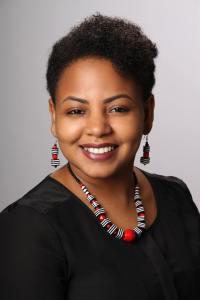
Azza Mustafa, PhD in Anthropology at BIGSAS – University of Bayreuth, 2021
In this article, I want to reflect on my PhD experience of doing research abroad. I will be focusing on:
• How I chose my research topic and how I ended up doing research on Africa in Germany
• What my main challenges were regarding doing research at home and authoring a thesis, tactics and strategies I followed to overcome these challenges, and how this shaped my scholarship and understanding of doing academic research
My first encounter was through the research Project WAMAKHAIR (Water Management in Khartoum International Research Project). The research is a cooperation between German, French, and Sudanese Universities. As any research cooperation between universities in the Global North and the Global South, there are senior research positions, Postdocs, PhD fellows, and master’s students.
The German partner came to the department of anthropology at the University of Khartoum, looking for a PhD candidate, and I was nominated by one of the department professors who had connections with German academic networks. At the time, I was a lecturer of Anthropology at the University of Gazira, in the faculty of Developmental Studies. I met with the German partner who was the potential supervisor for the PhD project. During the meeting, I remember I gave him a research proposal that I was working on. He told me that it was a good proposal, but suggested I do research on a different topic related to a project he was working on.
He presented the project to me asked if I would work with him. At the time, I was desperate to get funding for research, and do my PhD, so I accepted the offer. I thought I got a great chance that anyone who wants to pursue an academic career would not refuse. However, I later came to realise that I made a decision that affected the academic career I was dreaming of, but at the same time, I was exposed to an experience where I learned a lot, and I think it is important to share it, because normally when we are doing research and reflect about our journeys, we tend to overlook some essential parts of managing our challenges from doing the PhD as a whole process. What we do is reflect on our challenges during the fieldwork, as the research methodology books will tell us to do.
Through the German partner, I came to know about the Bayreuth International Graduate School of African Studies (BIGSAS), and he advised me to apply for a BIGSAS Junior Fellow position, of course, stating all the benefits I could have, and that for any PhD student who is doing research on Africa at the university of Bayreuth, it is best for them to be part of BIGSAS.
He did not sign a contract with me, yet the plan was that I first go to Germany and after I complete the preparatory course at BIGSAS and pass my evaluation, I will get to sign the contract. But at the same time, he wanted me to start doing an exploratory fieldwork while preparing my application to BIGSAS. I remember he gave me 400 Euros in cash from the project funds and made me sign a bill. I took leave from my job and started conducting the fieldwork, developing a proposal, then I applied to BIGSAS. He supported my application, I got selected, applied for a visa, and came to Germany.
What were my main challenges regarding doing research at home and authoring a thesis abroad?
The biggest issue was discrimination. I am not only talking about explicitly racist, violent, and openly discriminatory actions like many reports about international students’ challenges in Germany will say. I had my share of racist encounters: a woman who did not want to sit next to me in a bus, someone who said to me ‘go back to your country’, language barrier, and having difficulties to get accommodation. I acknowledge that these experiences have devastating impacts on foreign students. But in mentioning discrimination, I am referring more to structures that systemically disadvantage foreign students regarding funding one’s PhD project. Before sharing my experience on funding, I just want to give a short background of how a PhD research is funded in Germany.
PhD Funding in Germany
Doctoral students in Germany usually work part-time as academic assistants or research associates at a university, an independent research institution, or in the industry sector. Alternatively, they receive scholarships from a third-party organisations such as DAAD, which is the German Academic Exchange Service, and KAAD, which is the Catholic Academic Exchange Service. One might also be funded by a home institution, in which case you receive funds from your employer back in your home country. This could, for example be the ministry of higher education, that meets the minimum amount you need to live in Germany, which is 720 Euros. Another option is to block funds in a savings account, which is sufficient for the study duration you are applying for.
I apologise in advance for the German bureaucracy I am going to mention about, but it is important to understand my experience with funding.
So as a paid PhD student, you will be offered a fixed-time work contract as a research assistant on TV-L E13 (50%) or TV-L E13 (75%). A common work contract for PhD students is TV-L E13 (75%), which means that the typical salary is round about 3,001.70 Euros. The net salary (take home salary) depends on:
- Stufe, which means grade or level, which reflects the experience of the employees. As a fresh PhD student in your first year, you will be in stufe one, after the first year stufe two, after three years stufe three. Every year you get a raise, you are gaining experience and your experience is acknowledged by increasing your salary.
- Lohnsteuerklasse, which means wage tax class from “I” to “VI”. The taxing authority assigns you to certain Lohnsteuerklasse based on your circumstances.
Income tax and deductions:
- Income tax
- Solidarity surcharge
- National/Social insurance
- Health insurance
- Nursing and care insurance
- Pension fund
- Unemployment insurance
- Compulsory insurance (ensures that you receive a company pension in addition to the statutory pension).
Note: Some social payments are not taken from foreigners (or are paid back, when upon return; e.g. contributions to the pension fund).
Many German funding organisations support exceptionally talented international PhD students. As a rule, the requirement is an above average to first degree academic records. Some institutions have additional expectations, such as a specific commitment to a social, political, or religious cause. A scholarship is granted for a limited time, as a rule for two to three years, and students usually must reapply every year. Organisations that provide scholarships for outstanding students usually also support them with seminars and opportunities to exchange views within an alumni network.
The highest you get paid in a PhD programme is 1200 Euros and the lowest is 1000 Euros. Scholarships are exempt from income tax; they are mostly coming from government funds and taxpayers’ money. Some scholarships give you a family allowance, and some support half of your monthly health insurance payments.
Back to my experience
I am sure some of you are thinking that with my initial agreement I should not have issues with funding. So what happened?
When I came to Germany and joined BIGSAS, I did not start my PhD immediately. I started with a preparatory course, which includes a basic level A German language course, and writing my PhD proposal for six months then getting evaluated. The initial agreement was that I get a paid part-time job, or at-least that is what the project stated. However, I realised way later that the funds my supervisor had were not enough to support a three years fixed E13 75 percent contract. They were not even sufficient for one year. In fact, this was some money remaining from another Sudanese PhD candidate who left the project before finishing. I therefore told my supervisor that the funds were not sufficient for a PhD, and I wanted to apply for a Scholarship.
Just to mention, BIGSAS used to give scholarships, so some students would be admitted with a scholarship, and others without. The customary practice was that when you come to BIGSAS without a scholarship, you would receive funding (900 Euros) for 6 to 12 months depending on your preparatory course and evaluation. After that, DAAD would allocate a slot of scholarships to BIGSAS students. It was therefore, to some extent, assured that one gets a DAAD scholarship. However, in the year I was admitted, DAAD cut down the number of scholarships to only two.
My supervisor agreed with my plans, and I started working on the proposal and my funding application. When the time to submit my funding application came, he refused to write me a recommendation letter, and told me that my proposal was not ready. This was a traumatic experience. I was deceived, and I felt betrayed. He was still my supervisor; I did not want to confront him. So, I decided to take the one-year 50% contract from the research project and then try to find another organisation to support me.
Two things then happened that were blessings in disguise.
First, my supervisor was leaving Bayreuth to another University, and here I had two options; either to join him at his new chair or stay in Bayreuth and continue with another supervisor. I decided to stay and have a different supervisor.
The second thing was in relation to the field where I was supposed to have my final degree. In Germany, you get your degree in your supervisor’s field of expertise, so there is no degree in African Studies. I therefore had to have my degree in Anthropology as my new supervisor was from the Anthropology departments, and not Geography, which was the area of my former supervisor. That was a relief for me as my new supervisor was incredibly supportive and understanding of all the challenges I faced. BIGSAS was also helpful as they managed to allocate emergency funds for students who were in situations like mine). I blocked a saving account, worked at a restaurant for some time, then got hardship funding from the gender and equality program, which is special funding programme for women in academia awarded by the state of Bavaria.
What did I learn?
As Romina Istratii well stated: funding that brings scholars to Germany may arguably avoid issues of ‘brain drain’ by requiring that scholars return to their societies after a period of time, but they do not resolve Eurocentrism. Research has, and still is, embedded historically within dominant western epistemological framework that has favoured its own standards of Knowledge validation. Funding can put a foreign PhD student under a lot of pressure and compromises their chance to work in a productive and innovative way, and one gets exposed to different kinds of structural discrimination.
A final word for those aspiring to pursue a PhD in Germany, or elsewhere for that matter, I would urge them to make sure that they have their funding situation sorted out before embarking on the journey. This would save them a lot of time and energy needed for their research projects, not to mention the mental anguish of having to balance personal life and research activities while struggling to meet financial obligations that are necessary to ensure you can stay in the country and pursue your studies.
 Dr. Sis
Leave a comment