Dr. Rachel Muchira, PhD in Linguistics – Didactics of German as a Foreign Language, Herder-Institut, Universität Leipzig, 2019
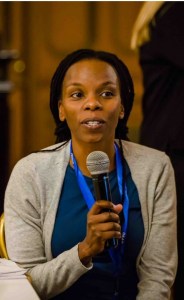
I graduated with a Bachelor of Education degree in German language and English Literature from Kenyatta University and thereafter pursued an M.A in German Studies at the University of Nairobi. I then joined the Moi University faculty as an Assistant Lecturer for German Studies in the Department of Linguistics and Foreign Languages. I knew that I wanted to pursue a career in academia and having a PhD is a basic requirement.
I had spent 3 months at the Humboldt Universität zu Berlin as part of my M.A studies, and had my eyes set on pursuing my PhD in Germany. The next concern for me was the funding and for this, I targeted the German Academic Exchange Service (DAAD). One prequalifying rule for consideration is that the M.A degree should not be more than 6 years old at the time of application for PhD funding. This informed my decision to start the application process in 2014, 4 years after graduating with my M.A.
I already knew that I wanted to pursue a PhD in Applied Linguistics. I was (and still am) interested in multilingualism and how it plays out in the teaching and learning of German as a foreign language in Kenyan schools. I therefore set upon developing a proposal and sought the assistance of lecturers in the fields of Linguistics and German Studies.
The DAAD requires an applicant to have either a letter of admission into a German university or a letter from a university professor declaring intent to supervise the PhD project. This was, in my experience, the most challenging part of the application process. The professors receive numerous applications and have as many projects running, so there is limited capacity. I identified professors in my field that could supervise my research and sent them my proposal. A couple wrote back informing me that they could not take up more research candidates, some never wrote back. One expressed interest in supervising my PhD, but this was long after the application window had closed.
This is where networks come in handy; a word of reference could get a professor to take a keener look at your proposal and create room in their already full research team. A colleague I had met a conference helped me get the attention of a Professor at the Leipzig University’s Herder-Institut, who saw the potential of my proposal and agreed to supervise my project. My application with the DAAD was successful. I applied for a study leave from my employer (Moi University) and this was also granted – on condition that I would return upon completion of my studies.
I began my PhD studies in the Winter Semester of 2015/16. The first thing I realized, when I presented my research project to our colloquium (2 weeks into my stay at the Herder-Institut), was how much I had to do. The library “Albertina” became my second home. I quickly appreciated the availability and accessibility of resources at the university. Our weekly colloquia sessions were an important part of my PhD journey, because I learnt the value of “peer learning”; some of the greatest breakthroughs came from interrogations and critique from my fellow researchers. I had fantastic supervisors who did what supervisors should do, which is teach, guide and support (choose your supervisor carefully; the PhD journey is difficult enough without having to deal with a non-supportive supervisor). I also learnt the value of social capital, as my family, friends, colleagues, students etc. helped me out in many ways – It takes a village!
Doctoral research is tough. Doing it away from home is tougher, because one is removed from a familiar and comforting environment. On the flipside, this distance could serve as motivation, in that there are fewer distractions. Having to juggle PhD research and other responsibilities that one has at home is a herculean task, which leads to doctoral candidates taking upwards of 5 years to complete their studies. Doctoral research abroad (like in Germany) with a scholarship is tied to a timeframe, and this serves to keep one focused. I successfully defended my thesis on 01.07.2019, came back home and immediately reported back to Moi University. The transition for me was easy because I always had it at the back of my mind and was prepared for it.
Despite the rigors and the pressure, the PhD process is a fantastic opportunity for personal evaluation and development. Being away from home is also time to focus fully on oneself and get to know oneself not only as a researcher, but also as a human being in a world that is at times extremely foreign. Enjoy this time, savour it even; travel, try out new foods and drinks, learn another skill (unrelated to your field of study), meet people, get into weird conversations…. allow yourself to grow!
 Dr. Sis
Leave a comment