Ana Beatriz Ribeiro, PhD Global Studies, Uni Leipzig 2012-18
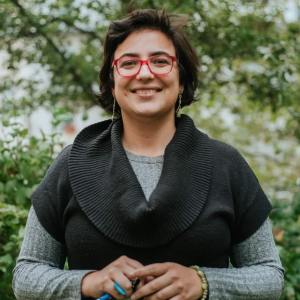
For my Master thesis in the dual-diploma Erasmus Mundus Global Studies (EMGS) program, which I did in Roskilde (Denmark) and Wroclaw (Poland), I had written about cooperation between the states of Mozambique and Brazil (my birthplace). The idea had stemmed from interacting over the summer in Geneva with a fellow intern at the World Health Organization who was from Mozambique, and assembling Blue Trunk Libraries to be sent to her country and other PALOPs (African Countries of Official Portuguese Language). The intern knew a lot about Brazil and many of the books in those mobile libraries came from Brazil, so I wanted to visit Mozambique and ask other people there what they knew and thought about my home country. I made it there some months later and stayed with my new friend in Maputo; she showed me the ropes and I ended up getting some great interviews, including with government people, which I could use in my thesis. My effort impressed my thesis supervisors and they gave me a confidence boost which I then channeled into a PhD proposal. Having fallen in love with the topic, I proposed to deepen and sharpen my research at Leipzig University.
I received an advertisement for a Global Studies PhD position at Leipzig University’s “Center for Area Studies” (now ReCentGlobe) from a colleague in my Master’s program, and felt that it was a match for my research topic. The East German university has built up a good reputation for both African Studies and Global History, and the move could be done quickly – a four-hour drive from Wroclaw, where I was living. I had moved to Europe from the United States two years earlier and would not have been keen to move transcontinentally once again at that time. It also helped that I would be allowed to write my PhD thesis in English, as I did not know any German then. Since Leipzig University’s Global Studies division runs the Master’s program I did, I was not completely unknown to the people running the Global Studies PhD research group I applied for. Perhaps this contributed to my standing out from the crowd, because I got an interview along with another candidate from the same Master’s. As it turns out, we both got into the research group in mid-2012.
Luckily, the research group received funding from the German Research Foundation (DFG), which has many funding opportunities for those wanting to pursue postgraduate studies in Germany. Within the framework of the “Critical Junctures of Globalization” group/program I applied for, I got a position as “junior researcher” that included a decent salary to live on in Leipzig for three years. However, I did not manage to finish my PhD within the three-year funding period. For the final two years, the university helped me obtain a combination of funding from the German Academic Exchange Service (DAAD) and Erasmus+ (with a three-month stay at Stellenbosch), and I also did a couple of part-time, temporary research-related jobs to stay afloat until my defense in 2018. For those looking to start a PhD, my advice would be to first identify and reach out to potential supervisors at universities that could be interested in hosting them and/or helping them develop their proposal and find the right funding sources if not available from the university itself (often the case). Having a prior relevant connection seems to make a big difference when applying for positions.
What was the experience of academic research and writing like, and what would you have done differently?
My field work periods in Brazil, Mozambique and Portugal gave me a lot to sort through, between dozens of interviews and hundreds of archival documents. I learned so much from the people I interacted with and my research changed and grew as I did. My PhD came to focus on deconstructing the history, narratives and practices surrounding development discourse between the Brazilian and Mozambican states, and I had to do tons of research to find the right theoretical and methodological framework. All of this while juggling the many ups and downs of life. Fortunately, I enjoy writing and never fell out of love with my topic. But indeed, the PhD experience can become lonely and demotivating sometimes, even as part of a research group, so I find it important to try to go to as many working groups and conferences as possible. Not only can you meet kindred spirits in such realms of academic exchange, but also perhaps make connections for field work, publications, and future job opportunities. Academia is quite competitive and I would advise those interested in pursuing a career in it to actively strategize for their next step. I wish I would have done more of that.
What has your post-PhD transition been like?
It has been a tough transition into my post-doc phase. I have been applying for academic jobs and fellowships since June 2020, having gotten close a few times while contending with a steady stream of rejections. Besides the pandemic, working against me is the fact that I may have waited too long after my PhD (two and a half years) to get started on my post-doc search, starting a business instead in the meantime. The first lockdown in Germany, in spring 2020, is when I decided I wanted to try to get back into academia, because I had a chance to finalize turning my PhD into a book – Modernization Dreams, Lusotropical Promises – and it got published by the renowned Brill. The process of revising the manuscript was enjoyable for me and my work got some validation by being published, which potential employers like. I am trying to keep my head up and to see the process of applying many times as an opportunity to improve my application-writing skills. There are a few sites I recommend for looking for postdoc opportunities internationally:
- https://www.timeshighereducation.com/
- https://www.h-net.org/jobs/job_browse.php
- https://www.hsozkult.de/job/page?language=en
- https://academicpositions.co.uk/
- https://euraxess.ec.europa.eu/jobs/search
Fellowships/programs in Europe:
- https://ec.europa.eu/research/mariecurieactions/actions/individual-fellowships_en
- https://www.leverhulme.ac.uk/early-career-fellowships
- https://www.humboldt-foundation.de/en/apply/sponsorship-programmes/humboldt-research-fellowship
- https://www.dfg.de/en/research_funding/programmes/individual/walter_benjamin/
 Dr. Sis
Leave a comment